Feller Ends Drought With Emotional Kitzbühel Slalom Triumph
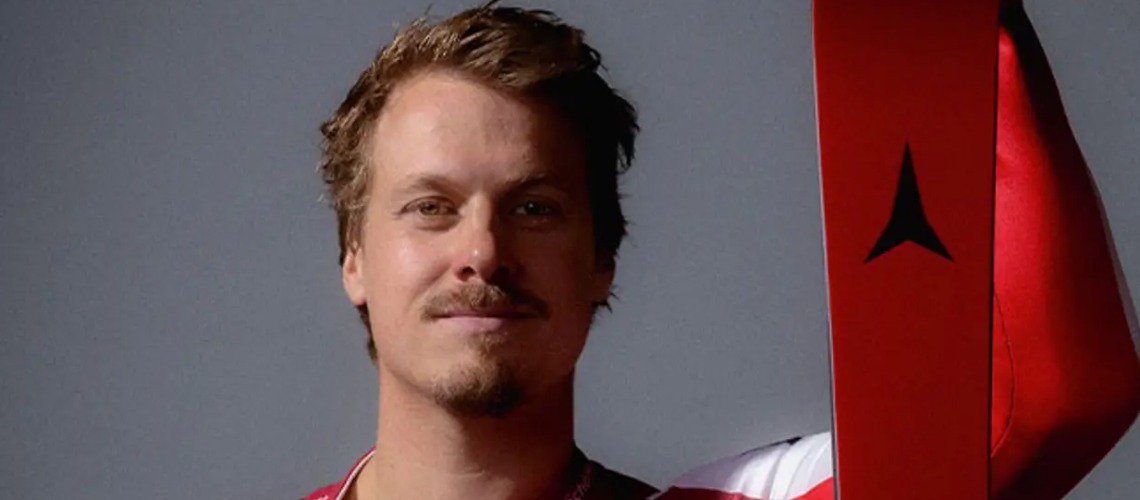
In front of thousands of roaring fans on the storied Ganslernhang, Manuel Feller delivered the performance of his career when it mattered most, surging from fourth place after the first run to claim a thrilling victory in Sunday's World Cup slalom at the Hahnenkammrennen.
The 33-year-old Tyrolean clocked a combined time of 1 minute, 40.60 seconds to edge Switzerland's Loïc Meillard by 0.35 seconds, with Germany's Linus Strasser rounding out the podium at 0.53 seconds back. The victory marked Feller's first World Cup win since March 2023 and his maiden triumph in Kitzbühel after eleven attempts at the prestigious event.
For an Austrian skier struggling through an inconsistent season plagued by what he has described as private difficulties, the timing could not have been sweeter. The victory brought Austria its first slalom podium of the winter and ended a nine-year drought for Austrian men in the Kitzbühel slalom, stretching back to Marcel Hirscher's triumph in 2017.
"I attacked and tried to move well. That was the right recipe for today," said the slalom world champion from Saalbach, his eyes glistening with emotion as the home crowd celebrated wildly. "During the run, I didn't think it was anything special. It was just a stable run, nothing more. But over the years, it has shown that this is the better approach here."
Feller trailed Meillard by 0.48 seconds heading into the decisive second run, sitting fourth behind the Swiss leader, Finland's Eduard Hallberg, and Norway's Henrik Kristoffersen. But on a course where the steep pitch and technical transitions had eliminated favorites throughout the day, Feller unleashed a masterful final run that combined precision with raw speed.
The Austrian's aggressive line choices and flawless technique through the critical transitions proved decisive. While Meillard posted only the seventeenth-fastest time in the second run and struggled to maintain his rhythm, Feller carved through the steep section with maximum velocity, erasing the deficit to claim his first golden chamois trophy—the coveted prize for Kitzbühel victors.
"There were two turns that went really quick, and I was a bit like, close your eyes, I don't know if I'm going to stay on the course," Feller admitted. "And after that, I had to push 120 percent, so in the end it was a really good run. It was pretty high intensity."
The electrifying atmosphere along the Ganslern provided the backdrop for one of the season's most dramatic finishes. Among the spectators were Bayern Munich stars Manuel Neuer and Konrad Laimer, along with Swedish skiing legend Ingemar Stenmark, who witnessed Feller's emotional breakthrough.
Meillard, who had delivered a flawless opening run from the number one start position, settled for second place despite leading at the halfway mark. The Swiss world champion has now finished on the podium three times this winter—second in Val d'Isère, third in Alta Badia, and now runner-up in Kitzbühel—but a victory remains elusive.
Strasser's charge from tenth position to claim third represented a remarkable comeback for the German, who posted the second-fastest time in the final run to secure his first podium of the season. The 2022 Kitzbühel champion demonstrated his trademark consistency on the demanding course, confirming his status among the world's elite technical skiers.
The race proved treacherous for many contenders. Norway's Atle Lie McGrath, leading the season's slalom standings, crashed out at the first wave in the opening run. Other past winners struggled badly: Clément Noël of France finished seventh, more than three-quarters of a second behind; Norway's Timon Haugan placed ninth; and Brazil's Lucas Pinheiro Braathen, despite climbing to fourth in the final standings, never threatened the leaders.
For Austria's slalom program, Feller's victory provided crucial momentum heading into next month's Milano Cortina Olympics. The nation that has produced some of skiing's greatest technical specialists had endured a frustrating winter in the discipline before Sunday's breakthrough.
Johannes Strolz fought valiantly for Olympic qualification, climbing from twenty-ninth start position to fifteenth place with a deficit of 1.16 seconds. His teammate Fabio Gstrein recovered from twenty-second after the first run to finish eleventh, posting the fastest time in the second run as he gained eleven positions.
Marco Schwarz, the 2022 Olympic combined and team gold medalist, struggled to seventeenth, likely falling short of Olympic qualification with Austria expected to name its team Monday morning in Vienna. The slalom roster appears set to include Feller, Michael Matt, Gstrein, and Schwarz if he makes the cut.
As the 86th Hahnenkammrennen concluded, Feller's golden chamois marked a fitting end to a weekend that showcased the unpredictability and drama that makes Kitzbühel one of skiing's most revered venues. After Marco Odermatt's Super-G triumph and Giovanni Franzoni's shocking downhill upset on the Streif, Austria finally had cause to celebrate.
For Feller, who hails from nearby Fieberbrunn in Tyrol, the victory represents both validation and liberation after a difficult season. As he stood atop the podium with tears in his eyes, it was clear this triumph meant far more than another World Cup win—it was a homecoming, a redemption, and a timely reminder that on the right day, in the right place, champions find a way to deliver their finest performances.