Corona Celebrates 10th Anniversary Of The Wexl Arena
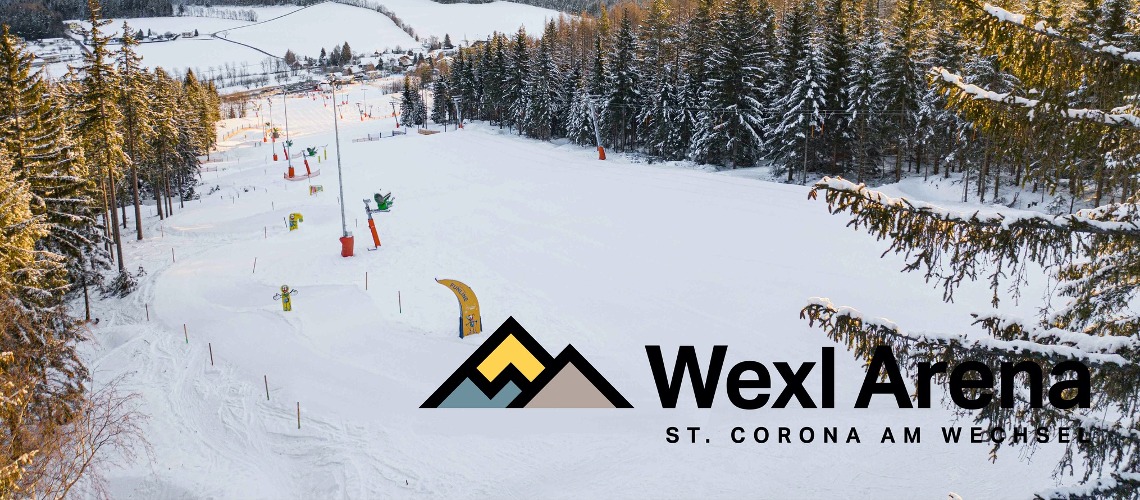
To celebrate the tenth anniversary of the Wexl Arena and the opening of the new Teichlift, numerous bike enthusiasts of all ages, along with representatives from sports, business, and politics, met yesterday, Friday, in St. Corona am Wechsel. Leading the way was Governor Johanna Mikl-Leitner, who has been connected to the region since her childhood. "We spent our summer and winter holidays here as children, and it's a joy to be able to witness the transformation of this region," she said.
"Here in Lower Austria, decisions are made based on a very clear objective – namely, the best for our children's future, and I believe we have achieved that here in St. Corona," emphasized Mikl-Leitner. The Wexl Arena has become "a social project, a tourism project, but above all, an economic one." She recalled the difficult beginnings when the state took over the facilities and the lifts were dismantled because snow conditions were becoming increasingly difficult due to climate change. "Back then, it was clear to us: if this region is to have a future, we must create a transformation to year-round tourism." They have been pursuing this path for years, and it brings added value to the region and is "a job engine and also an economic engine." The governor underscored this with figures from the last year, 2024: "25 million euros in revenue effect stayed in the region, and more than five million euros in tax revenue was generated." To generate even more added value in the region, a hotel project is already being planned.
Mikl-Leitner continued that they are on the right track both nationally and internationally and are repeatedly referred to, for example in the Washington Post, as "a region with a role model for transformation," and that makes them proud. The project being opened today continues this path: "Today we are opening the new Teichlift – the first drag lift in the world that is exclusively for cyclists – sensational," said the governor happily.
She concluded by emphasizing that for something like this to happen, it requires cooperation between the region, the mayors, the residents, and, of course, the property owners. But above all, it requires "courageous people who see difficult situations as opportunities, and visionaries." Such a person is Karl Morgenbesser, who, along with his team and the investors, is "the driving force of this region."
Managing Director Karl Morgenbesser said: "We are simply proud of our mountain and our people, who are committed to this and making a difference." Looking back on the beginnings, he added: "When something as formative as winter tourism in St. Corona is dismantled, a region not only loses its facilities, but also its soul and identity." They wanted to return this identity to the region, to the mountain. "Our theme was: above all, we want our children from the region to be proud of where they are and where they come from. They should go out into the world with 'Wexl' on their chest, on their caps and shirts, and we achieved that today." He thanked the landowners, whose support is unique in Austria, the state of Lower Austria, ecoplus, the authorities for their great cooperation, the shareholders and supporters, companies like Doppelmayr Seilbahnen and regional businesses like the Pflug Ski School, but above all, "to the best, most motivated team in the world."
Mayor Michael Gruber not only congratulated the Wexl Arena on its tenth anniversary, but also looked back further, as St. Corona am Wechsel is celebrating its 100th anniversary this year. He spoke about the "eventful history of the community," beginning as an important place of pilgrimage, the search for investors and the installation of the first chairlift in the 1960s, thus marking the birth of winter tourism, and culminating in the takeover of the facilities by the state of Lower Austria in the 1990s. "Those were pivotal years, but looking ahead, the transition from winter to year-round tourism was probably the best decision," Gruber said.
Helmut Miernicki, Managing Director of ecoplus, recalled the founding of ecoplus alpin in 2011, when five mountain regions in Lower Austria were taken over, including St. Corona, "and that was the most difficult situation at the time." Miernicki said that the region was "boiling" at the time, because people did not understand that "sometimes you have to end something in nature in order to create something new." He is therefore all the more pleased with the current success of the Wexl Arena and the cooperation of all players.
Hans Niessl, former Governor of Burgenland and President of Sport Austria since 2019, also spoke. He expressed his enthusiasm that "so many children, young people, and of course adults can participate in sports in such a unique natural setting." This project at Wechsel demonstrates that the combination of business, tourism, and sports brings success, said Niessl.
Markus Redl: From improvisation to true hybrid operation
The world's first dedicated bike lift, according to manufacturer Doppelmayr, was recently opened at the Wexl Trails in St. Corona am Wechsel. This expands the possibilities for winter hybrid operation: In the future, snow sports in the family ski area and use of part of the bike park will be possible simultaneously, spatially, temporally, and functionally, and largely independently of each other. At the Wexl Arena, the motor skills park and the Alpine Coaster summer toboggan run were already open in winter as needed.
With the dismantling of the traditional ski area in 2014, an attempt was made to initiate an alternative development into a year-round mountain adventure center. The partnership, entered into the following year with regional leaders around Karl Morgenbesser and Norbert Luckerbauer, has been in place for ten years. The transformation of St. Corona, at the transition from a ski area to a resort that attracts guests 365 days a year (250,000 arrivals annually, including 65,000 entries to the Wexl Trails), is also considered exemplary internationally. Reason enough for a personal reflection, a kind of interim summary.
Ten secrets of success from Wexl Arena and Wexl Trails
1 "Paths are created by walking." The dismantling of the two chairlifts and the subsequent repurposing and reconstruction of certain infrastructure as a "family arena" were already laid in 2013 under the project management of Isabella Hinterleitner. Karl Morgenbesser, as general leaseholder, then commissioned a conveyor belt in the summer of 2015 for initial mountain biking trials. Products and services, as well as the infrastructure, have gradually evolved. This isn't a one-time, major undertaking, but rather a years-long, instructive process – one that is certainly not yet complete. The current major issue is adequate overnight accommodations for guests from near and far.
2 It is thanks to Karl's skill and the professionalism of his team that all users and stakeholders are very well integrated. A trusting relationship has developed, especially around the Wexl Trails, with foresters like Thomas Schenker of the Wechselforst Working Group: The balance of interests works. The regional municipalities have actively contributed through their own funding project; the Wexl Trails now extend, for example, to the Mönichkirchen Adventure Alpine Pasture. The two most important landowners directly adjacent to the Wexl Arena in the Unternberg district are involved as farm holiday hosts, co-shareholders, and, in the case of Manfred Gruber, even as prudent farm managers.
3 Karl Morgenbesser and Norbert Luckerbauer have gone far beyond their role as general leaseholders. For example, they have now created Wexl Base, a tailor-made, multifunctional building on their own account. It is used in various ways depending on the season and demand, and can also be adapted to future requirements. In recent years, strategically important land purchases have been made to secure space for further development. It is a public-private partnership: the private partner is well-established in the region, assumes the entrepreneurial risk, and drives development forward. The public sector provides support.
4 The relaunch as a family arena involved focusing on a specific target group: families with young children (up to ten years old) were to be catered to year-round. The selection and design of the attractions focused exclusively on their needs. The children's ski area, previously privately operated by the Pflug ski school in the Unternberg district, was not directly connected to the former ski area, but already had an excellent reputation. The new family ski area being built at the same location, the Wexl Lounge infrastructure building, and the neighboring motor skills park offered families high quality even in the first phase of development.
5 The family specialization has certainly benefited from the clarity of the areas; the fact that the area is used almost exclusively by members of the same family has further increased the perceived safety. It is all the more remarkable that in the years since, another target group has emerged with mountain bike enthusiasts, but even a downhill offering has not diminished the appeal for families. The gentle topography of the Wechsel and the way Philipp Wiedhofer designed the trails have contributed to this. Even small children with balance bikes could use the first flow trail, and later developments like the jump line are considered safe – particularly suitable for young people and beginners.
6 Following the completion of the new summer toboggan run in autumn 2015, the Alpine Coaster was abruptly opened during the Christmas holidays due to unusually warm temperatures. Meanwhile, the motor skills park has also proven its worth in winter – operating in hybrid mode alongside the family ski area. The Teichlift, a dedicated bike lift, is opening soon, and can be used year-round; unlike the Base Lift, which serves as a drag lift in the lower section in winter. Even before, it was necessary to switch quickly and flexibly between snow sports and mountain bike setups. Now, the Teichlift and its associated trails are available year-round.
7 A clever solution already existed in 1979 with the optional mid-station of the then Kampstein single-seater chairlift; the cable could be swung in at the Orthof level. During the construction of the Wexl Lounge in the Unternberg district, a ramp and steel bridge were designed together with architect Georg Driendl to allow guests to cross the street comfortably. The entire concept, with two arrival points in Unternberg and at Orthof, was unorthodox – today, this redundancy is an advantage for year-round operation. The easyLOOP system was developed by Simon Hanl for the surface lift, which opened in 2021: A bar is hooked onto the stem of the bicycle and works effortlessly.
8 When the motor skills park, designed by Roland Werthner, opened in 2016, it was unusual to charge for its use. The decision to monetize it proved to be a perfect fit, with the motor skills park being an important source of revenue from the very beginning. The uniform pricing policy for entry to certain areas, such as the ski area or the magic carpet land, without differentiation by age, has also proven successful. Only children under three years of age go free when accompanied by a paying adult. The Wexl Arena Card 365 has long been a product that promises an (almost) year-round mountain experience in its name. The next logical step is to network with other bike parks in an international card network.
9 From the family arena to the adventure arena to the Wexl Arena: Even with the expansion of the target group to include mountain bikers, the goal of offering the most accessible options possible – already shaped by family friendliness – has remained the same. A good example is the Uphill Flow Trail, which offers even untrained and inexperienced guests a sense of achievement while riding uphill on an e-bike. Instead of focusing solely on the uphill, thus developing challenging singletrack and spectacular jumps, the downhill cycle path achieves the exact opposite. This allows visitors (even with gravel bikes) to gain their first downhill experience on a constructed trail: on gently sloping terrain, without high or steep curves or even roots.
10 When a vacancy conference on tourism was held in St. Corona am Wechsel in 2016 under the title "Rooms Available!", organized by nonconform, there was no shortage of examples. In the meantime, Andreas Wessely and Michael Niederer have revitalized the Fernblick in the town center and transformed it into a wedding venue. It was so successful that they have now completely renovated the long-vacant, semi-dilapidated Hotel St. Corona and reopened it as "Vis-á-Vis." Mayor Michael Gruber and his family have opened a second, attractive holiday home at the Orthof, right next to the Wexl Trails. The high demand for camping shows that new accommodation options are coming!