City Of Herne: Urban Cable Car Blumenthal Is Taking Shape
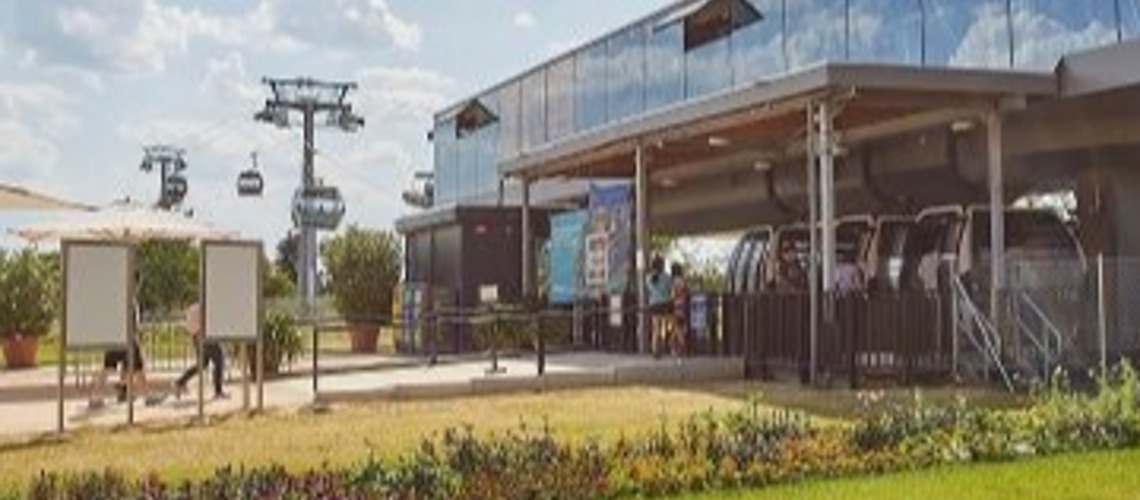
Following the decision by the transport committee of the North Rhine-Westphalia state parliament to include the planned urban cable car in Herne in the public transport needs plan of the state of NRW, the city of Herne, the Rhine-Ruhr transport association (VRR) and the Herne – Castrop-Rauxel tram company have now explained the next steps on the way to realizing the pioneering transport project.
Mayor Dr. Frank Dudda sees himself and the city of Herne vindicated by the decision of the Düsseldorf State Parliament: “In Herne, we want to integrate the newly developed Blumenthal area into the existing local and regional public transport network in an innovative, efficient, and climate-friendly way with the first urban cable car of its kind in Germany. The cable car is the preferred option here because it creates the possibility of a direct connection without detours and independent of road traffic. This is important for the residents plagued by noise from the main roads.”
VRR board spokesman Oliver Wittke sees urban cable cars as a forward-looking addition to public transport. "They offer the opportunity to connect urban spaces. The VRR has been involved in the Herne cable car project from the very beginning and supports the city with funding-related issues. The project also gives us the opportunity to develop standards for integrating cable cars as a fully-fledged mode of transport within the network, together with all partners. Our goal: Sustainable mobility for the region."
To make using the cable car as easy and straightforward as possible for public transport users, the new mode of transport will be integrated into the VRR's local transport and fare system. The cable car will be operated by the local public transport company HCR: "We are currently working on implementing the relevant resolutions of the Herne City Council," reports HCR Managing Director Karsten Krüger.
At the same time, the city of Herne has conducted the standardized evaluation, which is crucial for the further implementation of the project: "This is a method for the overall economic benefit-cost analysis, particularly for public transport projects," explains Herne's City Planning Director, Stefan Thabe. With the successful completion of this evaluation, the project's economic benefit and thus its eligibility for funding have been demonstrated: "This means that the necessary prerequisites have now been met for the city of Herne to apply for public transport funding. This is a milestone on the path to realizing the project," says Stefan Thabe.
In closing, Mayor Frank Dudda placed the cable car project within the broader context of urban development: “We plan to create approximately 4,000 new jobs on the site of the former Blumenthal coal mine by attracting forward-looking companies. This will bring economic and purchasing power to the city and the region. At the same time, more than 40 percent of the original mine site will be preserved as publicly accessible green spaces. We are therefore also creating a new, centrally located recreational area within the city, thus improving the quality of life for residents. By providing future access to the Blumenthal area via a cable car system with a direct connection to Herne-Wanne-Eickel main train station, we will significantly reduce road traffic.”
The plan is for the development of the Blumenthal area and the realization of the cable car intended for this purpose to begin construction by the end of the current decade.