CDOT To Replace Avalanche Mitigation System On Loveland Pass Over Concerns Of 'Catastrophic Failure'
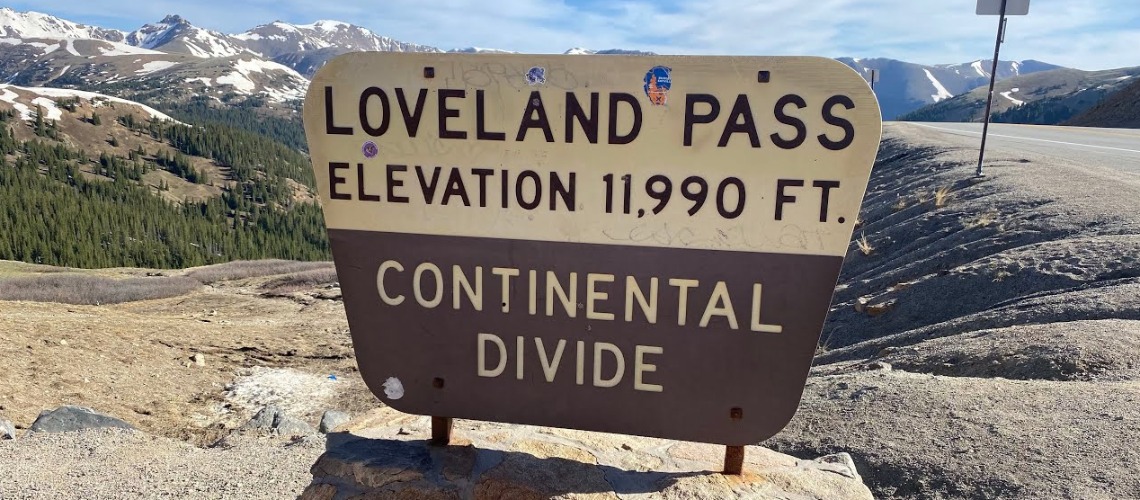
The Colorado Department of Transportation has approved $2 million to replace failing avalanche mitigation systems on Loveland Pass after repeated equipment failures raised concerns about potential catastrophic breakdowns.
The Colorado Transportation Commission voted unanimously in November to authorize the funding from its program reserve balance, targeting the replacement of Gazex avalanche control systems installed in 2015 along the Seven Sisters slide paths on the east side of Loveland Pass.
The system is responsible for triggering controlled slides in the "Seven Sisters"—a sequence of seven major avalanche paths that loom over the highway near the Loveland Ski Area. These paths are among the most active in the state, frequently depositing massive amounts of snow onto the road that serves as the primary route for hazardous material (hazmat) trucks.
- The Hazard: Loveland Pass is the only detour when the Eisenhower-Johnson Memorial Tunnels are closed or restricted.
- The Failure: Three of the ten steel exploder tubes have suffered structural "catastrophic failures" over the last year, including a major incident in February 2025 where a tube shattered during a remote detonation.
- The Cost: Repairing the outdated French-made system has cost taxpayers hundreds of thousands of dollars in recent years, leading officials to conclude that a full replacement is the only viable path forward.
The $2 million funding request, approved by transportation commissioners late last year, will see the old Gazex system replaced with more modern Wyssen Avalanche Control towers or similar next-generation RACS technology.
Unlike the Gazex system, which uses a fixed pipe to ignite a mixture of propane and oxygen, newer systems often utilize deployable charges dropped from towers via a remote-controlled tether. This method is considered more reliable and easier to maintain in the brutal conditions of the Continental Divide.
The remote-controlled systems have been deemed unreliable and carry an elevated risk of catastrophic failure, CDOT Deputy Chief Financial Officer Bethany Nicholas told commissioners at their November meeting. The equipment has experienced three failures since installation, with the most recent occurring in February.
However, CDOT officials emphasized that the term "catastrophic failure" refers to the equipment itself, not public safety. When a failure occurs, the system self-implodes and ceases to function properly, according to Shawn Smith, CDOT's Division of Maintenance and Operations Director.
When failures happen, maintenance crews must hike to the mountaintop to remove the damaged cylinders from the Gazex systems. CDOT then relies on backup equipment—an avalauncher, which is a compressed-gas cannon mounted in a truck bed that fires projectiles to trigger controlled avalanches.
The Seven Sisters area is known as an active avalanche path that slides regularly. Last winter, a vehicle was caught in an avalanche from the Seven Sisters, though no one was injured. The incident resulted in Loveland Pass closing for several hours.
CDOT plans to install a more reliable avalanche mitigation system similar to those used along the Interstate 70 corridor, which can be loaded by helicopter. The agency has not yet determined which specific system will replace the current Gazex equipment.
"CDOT will still be able to safely conduct avalanche mitigation on Loveland Pass," said Stacia Sellers, CDOT Strategic Communications Lead. "The traveling public will not be impacted."
All systems on Loveland Pass are currently operational, though they are no longer covered by warranty. The replacement work is scheduled for summer, when weather conditions make mountain construction more feasible.
The Gazex systems use compressed gas to trigger controlled avalanches, bringing down snow in managed slides before dangerous accumulations can form naturally. CDOT operates more than 40 remotely controlled avalanche mitigation systems across Colorado, including locations on Monarch Pass, Wolf Creek Pass, Berthoud Pass, and Red Mountain Pass.
Mike Chapman, CDOT's winter operations manager, said the equipment failures create additional challenges for workers but do not increase closure risks for the highway due to the department's backup systems and redundancies.