"Cable Car Meeting 2025" Takes Place At The Tyrolean Chamber Of Commerce.

Under the motto "Looking Ahead," the "Cable Car Meeting 2025" took place at the Tyrolean Chamber of Commerce. Representatives of the Tyrolean cable car industry discussed geopolitical tensions, the economic weakness of Europe, and the competitiveness of the region. In addition to the challenges, positive prospects for the cable car sector were also addressed.
Despite continued volatile conditions, the cable car industry is experiencing a transition from crisis mode back to proactive shaping of the future. "The motto 'Looking ahead' was chosen deliberately. For us cable car operators, it's clear: we don't move sideways or backwards, but always forwards and upwards. The overall mood reflects this. The industry is well-positioned, although we must continue to closely monitor external conditions," explained Reinhard Klier, Chairman of the Tyrolean Cable Car Companies Association, in his opening remarks.
Demand for winter sports remains stable
Despite the economic downturn in parts of Central Europe – particularly in Germany – demand for mountain holidays and winter sports remains stable. "People are longing to breathe deeply, get active, and experience nature. We're clearly feeling that," emphasizes Klier. Current surveys show that around 84 percent of guests participate in alpine winter sports. The approximately 25 million first-time entries in the 2024/25 winter season also indicate that the trend is continuing towards pre-pandemic levels – the desire for skiing and winter sports experiences remains consistently high.
Objective dialogue and focus on product development
In recent years, the cable car industry has faced sometimes emotionally charged debates – from energy issues and the discussion about "white ribbons" to safety and pricing debates. "Today, we find that there are currently no acute crises that are directly affecting us. We've flipped the switch – away from constant crisis management and towards product development and clear communication," said Klier.
Demand for reducing bureaucracy and strengthening competitiveness
“There is no reason to be pessimistic about the future. But economic success is the result of adaptability and foresight,” Klier emphasizes. In this context, the industry is calling for a reduction in Austria's government spending ratio, which has risen to over 50 percent since the start of the pandemic, in order to remain competitive as a business location and employer. Furthermore, small and medium-sized enterprises (SMEs) are burdened by increasing regulation and bureaucracy. Another key demand of policymakers is a return to a fair distribution of benefits: “Those who give their best every day expect appreciation – and a tax framework that recognizes performance.”
Keynote: "The Moving Brain" and Upcycling Highlight
As part of the "Cable Car Meeting 2025," Martin Korte from the Technical University of Braunschweig gave a presentation on the importance of exercise for the human brain and the question of whether exercise makes you smarter. His conclusion: "Exercise promotes the formation of new nerve cells, improves blood flow to the brain, increases concentration, and strengthens well-being and self-confidence."
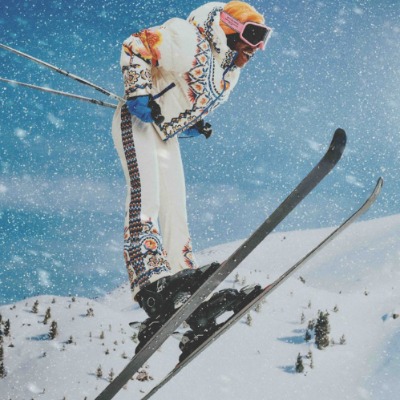
The stage held a surprise for the young talents: third-year students from the fashion program at the Ferrarischule Innsbruck presented alpine evening wear made from cable car buffs provided by the Tyrolean cable car industry. A class of 27 students is setting new trends. Upcycling is a form of reuse. Sustainability and resource conservation go hand in hand; the youth are taking responsibility for tomorrow with yesterday's fabrics – and doing so with a wow factor.